
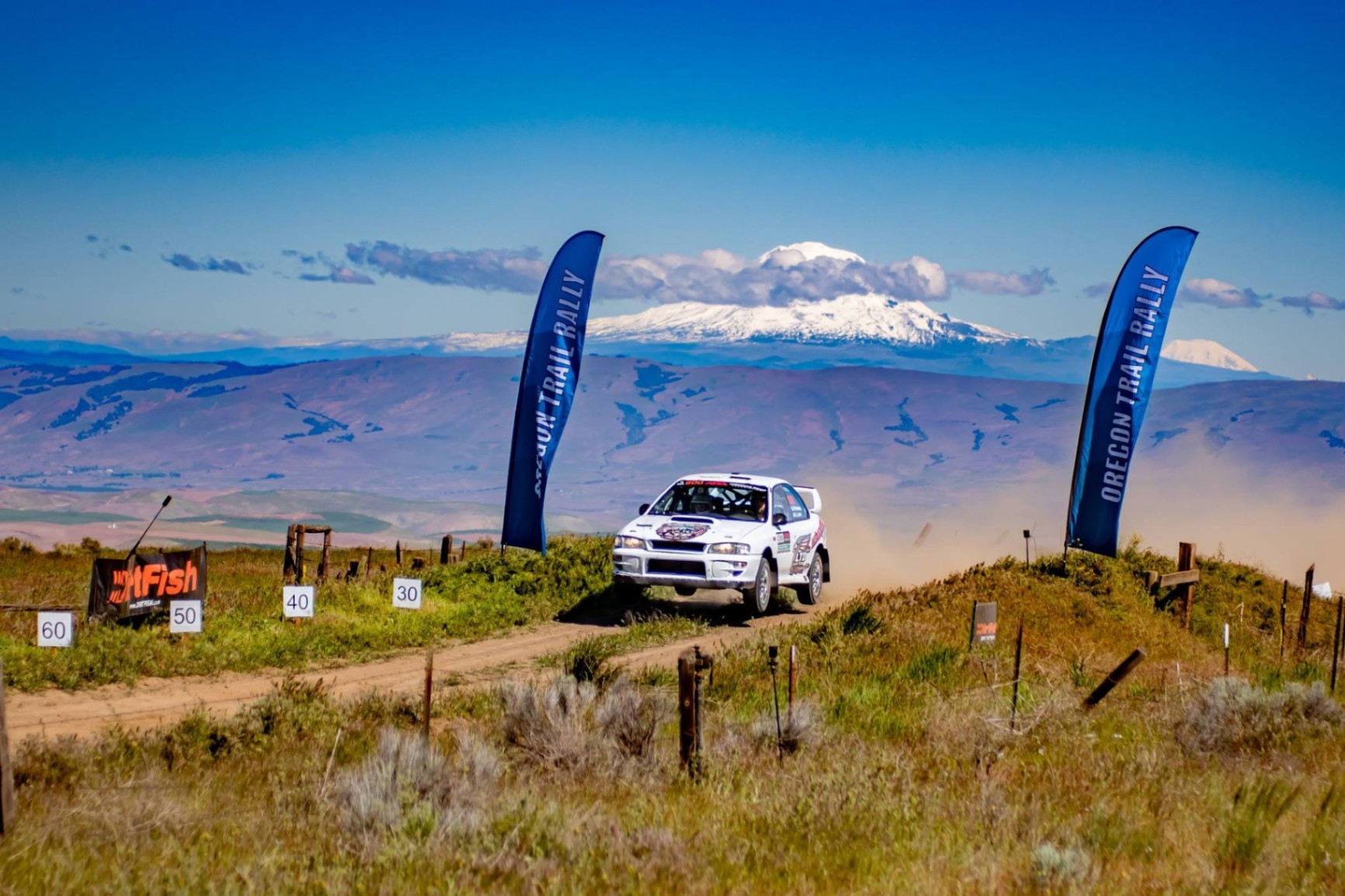
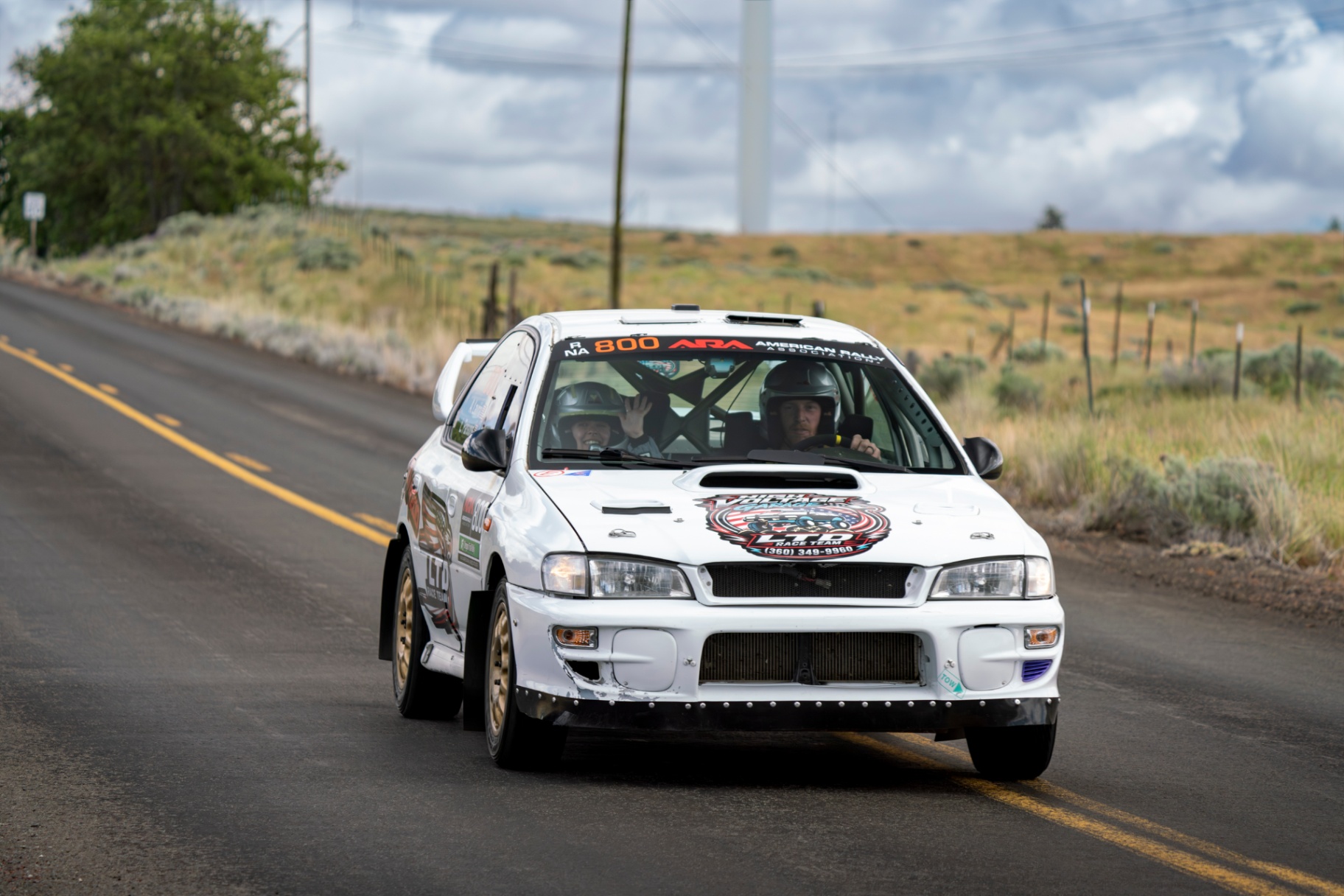
Lee and Andrea at the Boyd (DirtFish) jumps. Photo by Dan Ring (@ingspeedrally)
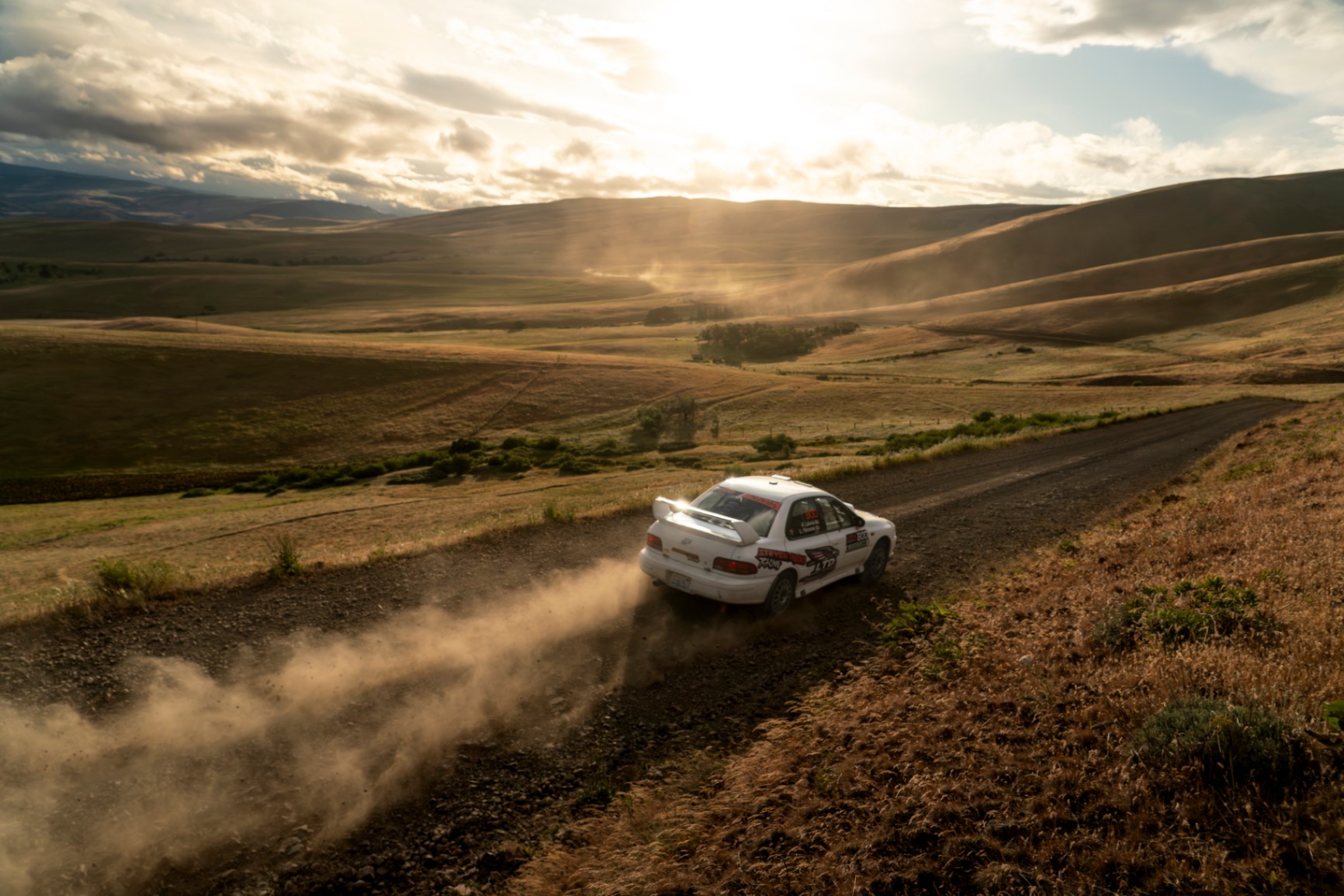
"We jump in the car and head for the first stage. All I can think about is all those years of playing with cars and driving hard. We get to the time control and my heart is sitting on redline at 6000 bpm." - Lee Parsons, at 2026 ARA Oregon Trail Rally.
This is Lee Parsons’ Oregon Trail Rally story. A story that took nearly 30 years to come together, inevitably, but almost by chance.
In it, there’s the young Lee from thirty years ago getting hooked on speed and building things with his hands. There’s the same Lee years later fighting through an almost career-ending injury trying to find his way back. There’s Phil Clarke trusting him to help build a rally car. There’s the friendships built through crewing, fabrication, and years spent around rally people. There’s the group of friends who eventually found a way to get him into the driver seat at Oregon Trail Rally. And throughout all of it, there’s family supporting him the entire way.
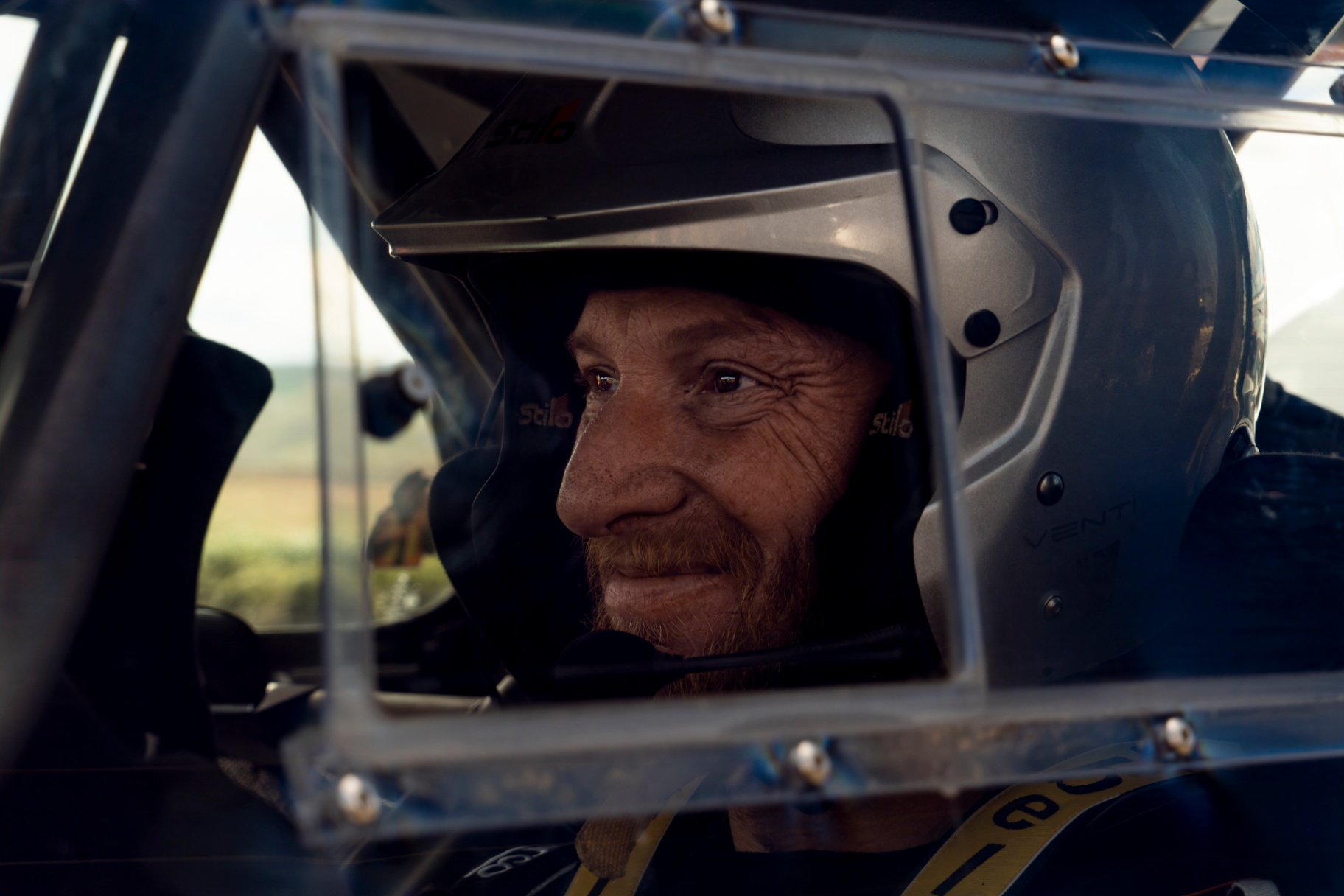
It feels like more than just one person’s story. It feels like the kind of rally story that represents the spirit of the American rally itself.
I first came across Lee Parsons’ Oregon Trail Rally story afterward through a Facebook post. I had already seen him around several events before while photographing LTD Race Team’s #799 car, usually as the tall rugged-looking guy working on the cars between stages. After reading his post from OTR, I reached out, visited his shop, and spent an afternoon listening to how all of it came together.
The rest of this post is based on his Facebook post and our conversation.
Thirty Years Earlier
Lee thinks the racing bug probably bit him around six years old at an old ORV Park out towards Elma.
His dad had finished racing for the day and loaded the truck back onto the trailer while standing around talking with friends. Lee climbed into the caged truck and started playing with switches and buttons.
Then he pulled the shifter.
“In true mini me rally driver fashion I pulled back on the shifter and off I went, right off the trailer,” Lee wrote. “Scared the hell outta me and dad was not impressed but they had a good laugh about.”
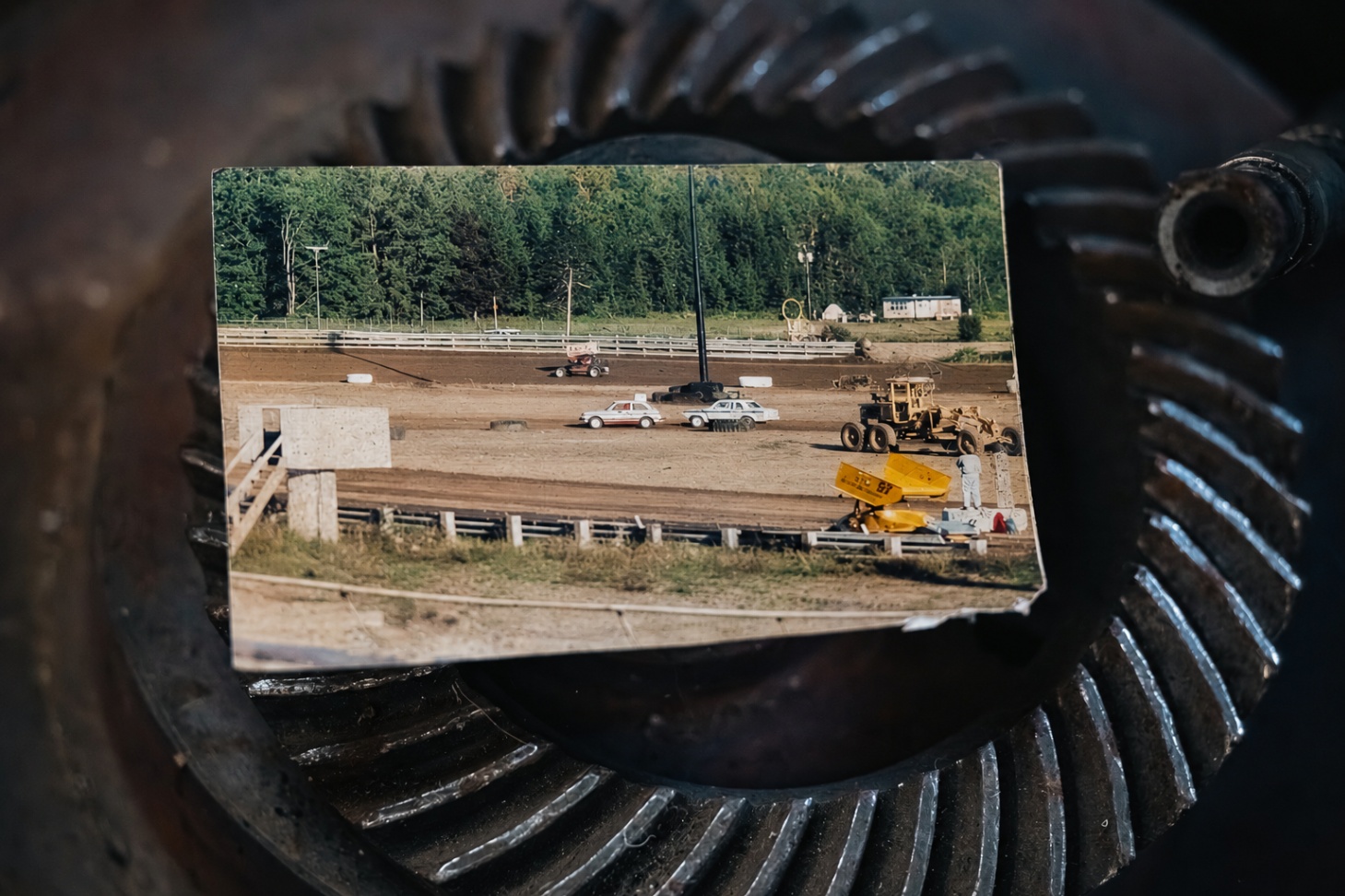
Looking back now, he sees that moment differently.
“I was too young to know it at the time but I know now that was the moment I experienced the adrenaline rush inside a caged vehicle and I was corrupted forever.”
When talking about where his love for building things came from, Lee went back to his dad’s automotive machine shop and an old parts car sitting outside.
“When I was just coming into kindergarten, my dad got me a little toolkit,” Lee said during our conversation. “He had an old parts car sitting out in the yard.”
After school, his dad pointed toward the car and told him:
“Here’s some tools. Go tear that car apart. Just take it apart.”
“Within a week, I had it stripped down to the complete shell,” Lee said. “The doors were off, the dash was out, seats were out, all the interior was pulled out of it.”
Looking back on it now, he laughs about one detail.
“I kind of wish he would have made me put it back together,” he joked. “I’d be a little better at it.”
Eventually, racing became too expensive and Lee's dad stepped away from the sport. The old rally truck sat for years.
When Lee asked for a car, his dad pointed at the truck, an engine on a stand, a transmission under a bench, and a drawer full of bolts.
“If you can figure out how to make it run, you can drive it.”
About two weeks later, his dad came home from work to find Lee already driving it.
From the moment he got his driver's license, Lee was looking for any excuse to get into the woods with a car. Gravel roads and logging roads became his classroom.
“My best friend at the time and I would meet up at lunch, call the attendance office from my phone to excuse ourselves for the remainder of the day and go mash through the hills.”
Years later, after what Lee describes as his “irresponsible shithead teenage years,” he and Amanda bought their first house in Shelton. Around the same time, Olympus Rally came back to town.
“It re sparked that fire inside.”
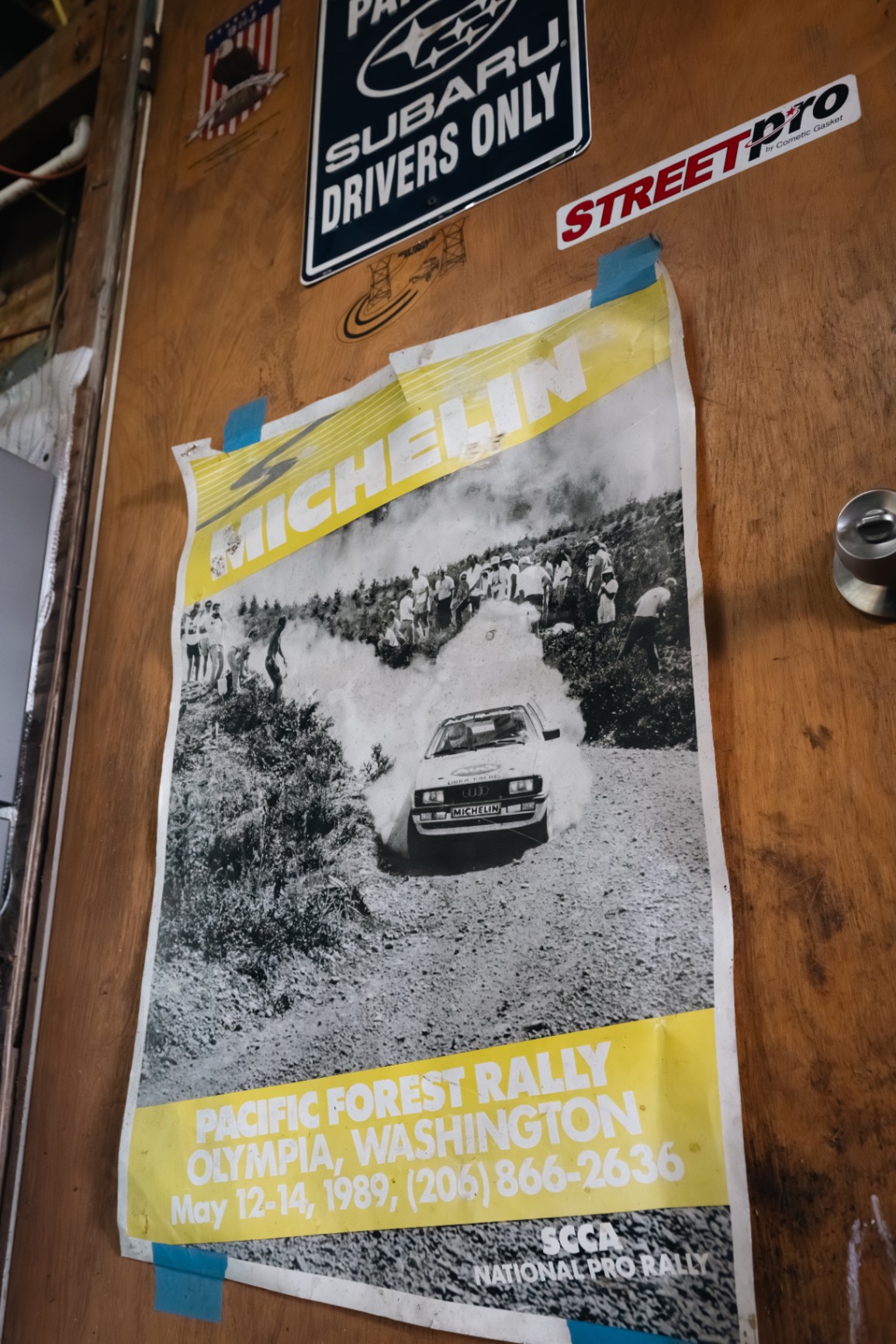
Not long after, Lee and a group of friends carved out a small rallycross track on their property in Winlock and started hosting events. They called it High Voltage Raceway.
During that time, Lee discovered Northwest Rally Association events and started competing regularly. "...It was a blast and I felt closer to rally than ever before.”
Rally Without Driving
Then 2020 happened.
While working construction during the shutdown period, Lee suffered a fall that left him with three compression fractures in his back.
“I lay on the ground for about 45 minutes,
till I could catch my breath.”
Recovery was slow. For months he was mostly confined to bed. Later, when he could finally move around again, even standing at a workbench for a short period of time was difficult.
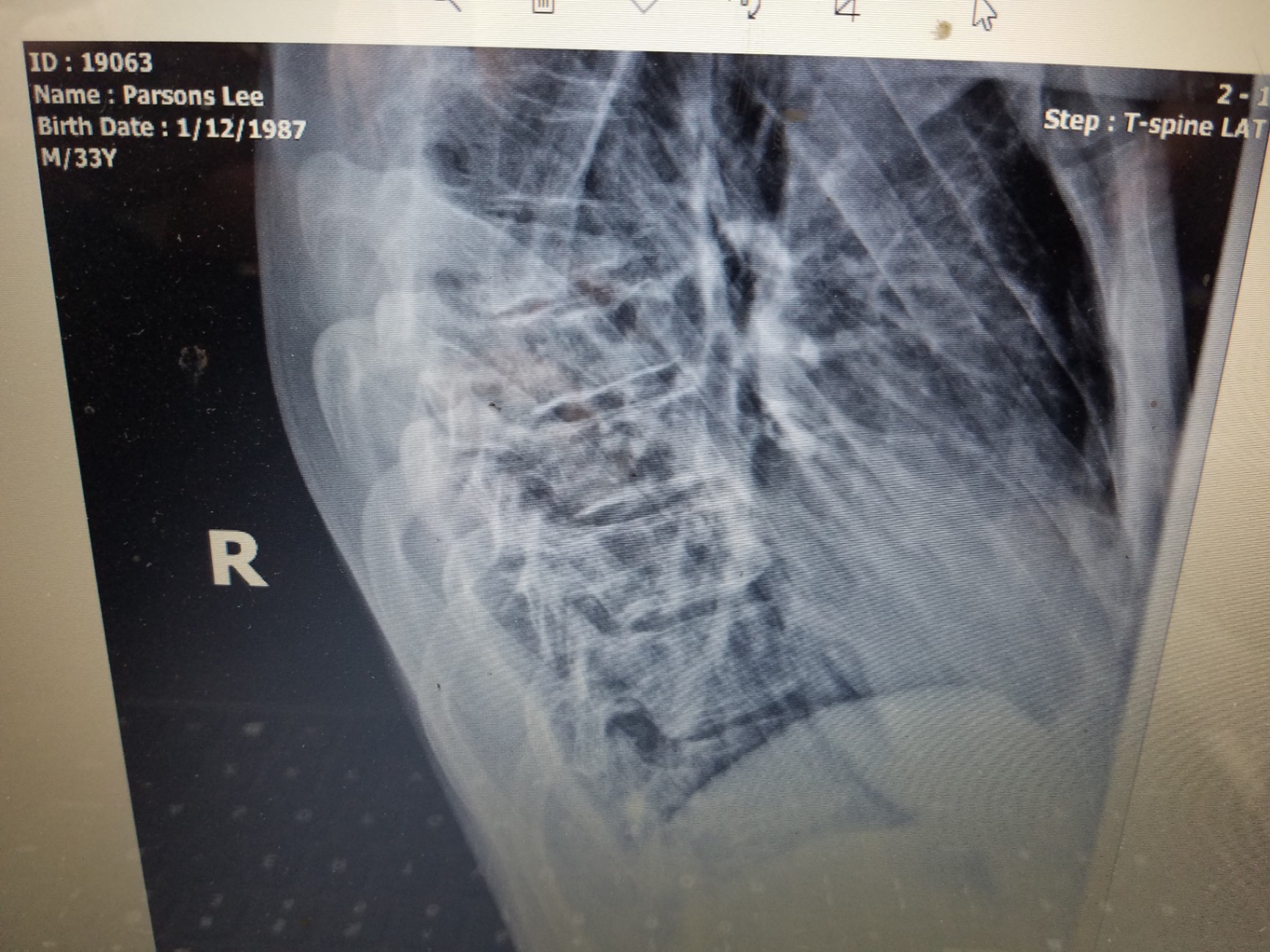
“After about a month or two months of that, I was able to stand at the workbench and tinker on things for 15 or 20 minutes at a time.”
“Go sit down for a half hour, 45 minutes, and then go tinker for another 10 or 15.”
One of the projects that got him through that period was a Subaru that would eventually become known as Grootbaru.
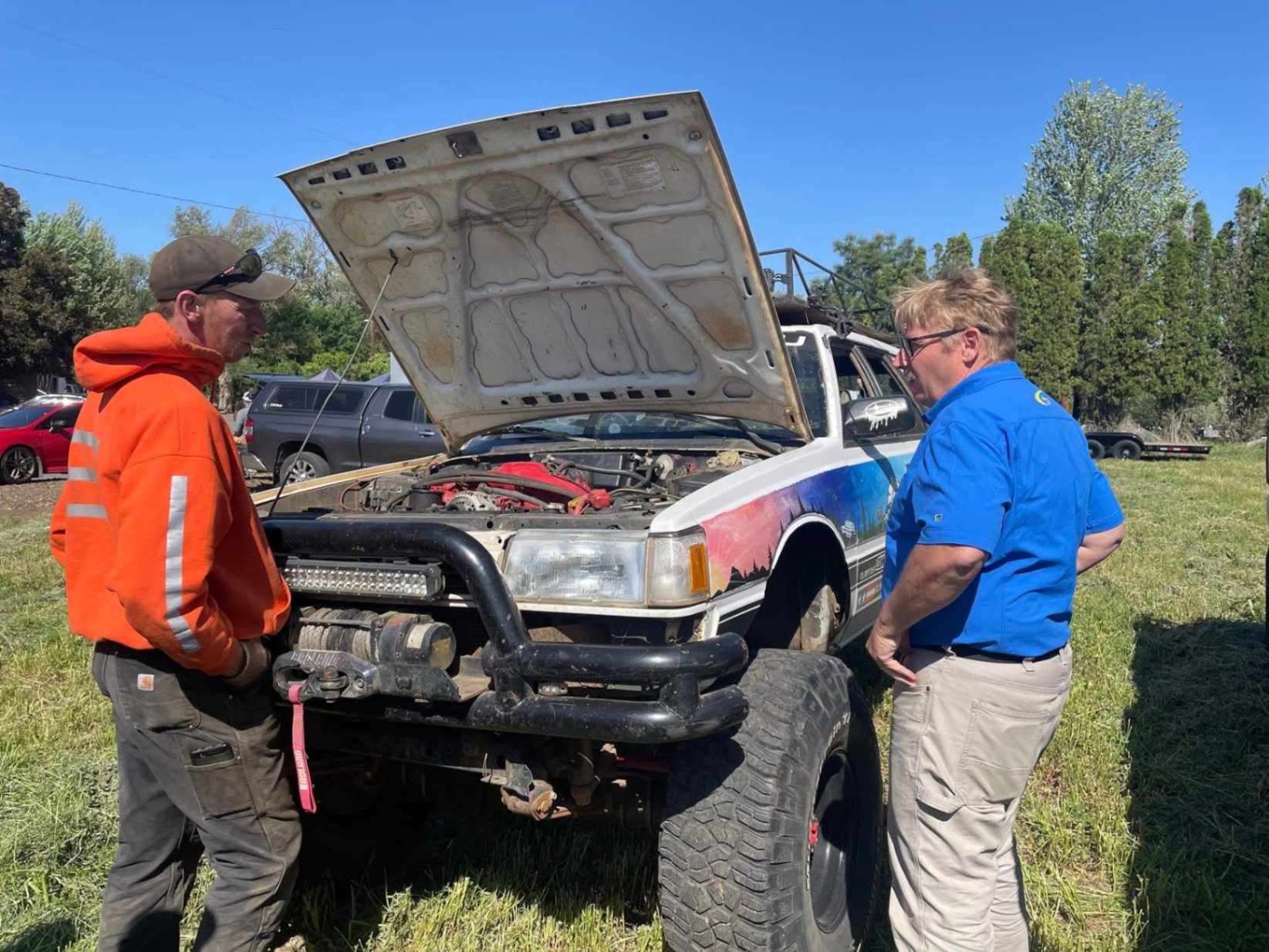
“It was basically a rehab project. It's what got me back to moving again.”
Physically, things were improving. Mentally was another story.
A few months later, Lee tried getting back behind the wheel at the NWRA Rallycross Fest. The result was not what he hoped for.
“I re-aggravated the injury and basically started over.”
For the first time, rally driving no longer felt guaranteed.
“I truly felt like I had been robbed of a sport that I had been dreaming of my entire life.”
If he couldn't drive, though, maybe he could still build.
Around that time, Phil Clarke approached him about helping build a stage rally car. Lee had never built a cage before, but the challenge immediately grabbed his attention.
What started as helping a friend soon became something much bigger.
"Phil Took a Chance on Me"
Around that time, Phil Clarke was getting ready to move from Rallycross into stage rally and needed a car built.
Lee had recently discovered that he enjoyed fabrication, especially cage building.
When asked what he enjoyed most about building cages, he described it as a puzzle.
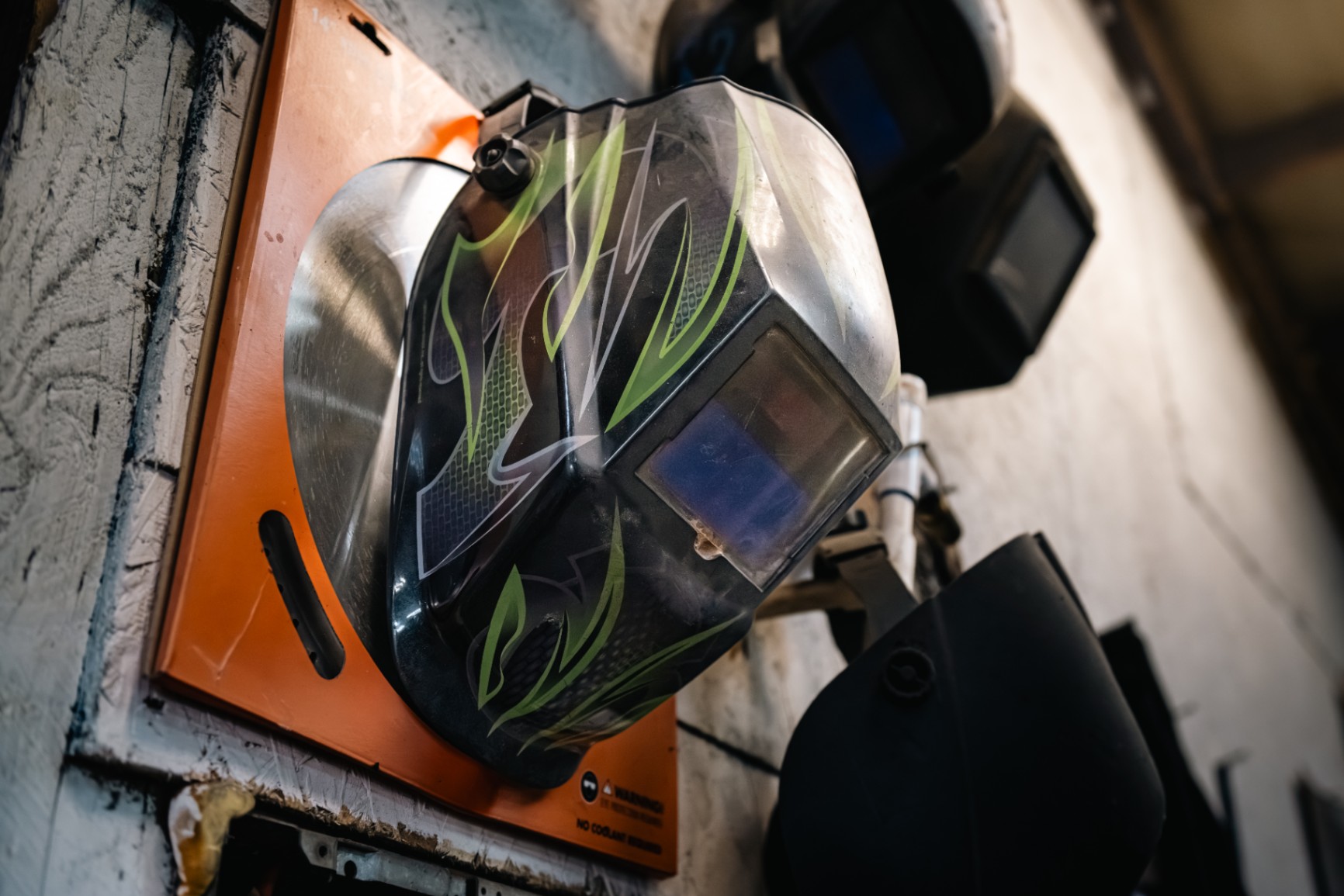
“I really enjoyed the process of it overall,” he said. “Trying to fit as much cage as possible into the car while still giving the occupants as much room as possible.”
“Phil took a pretty big chance on me because it was right when I had just discovered that I wanted to build cages.”, Lee continued.
What started as a single project quickly turned into something much bigger. Lee helped build the cage, assemble the car, and get it ready for competition. By the time they made it through their first rally together, he had naturally become crew chief for the car.
“What better guy than the guy that put it together, every nut and bolt, from the ground up?”
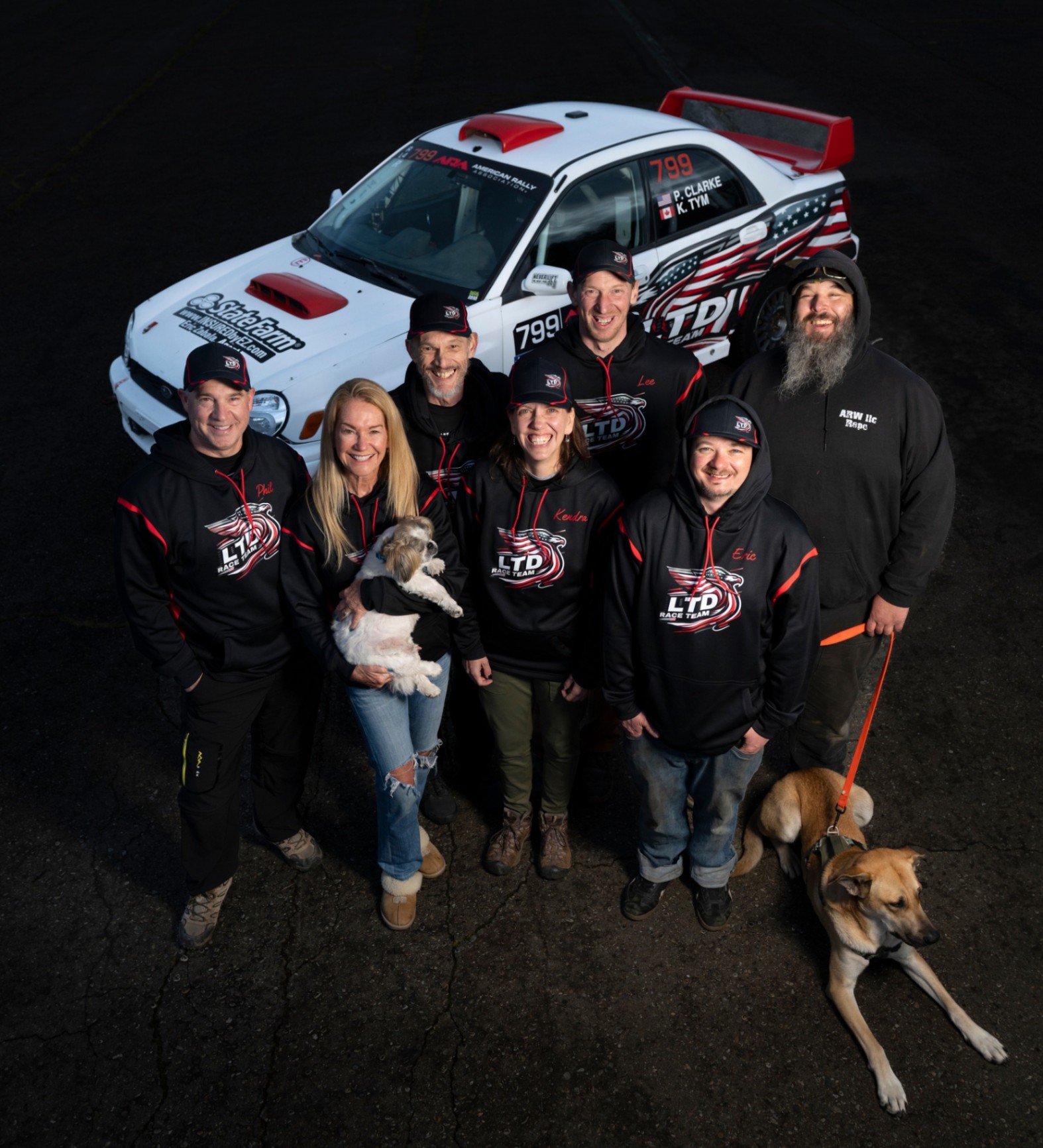
Over the years, crewing for Phil introduced him to more people in the rally community and helped establish the reputation many rally competitors know him for today.
“Over the years, crewing for him, I've been able to meet so many great people and it's really helped me promote the business of doing cages.”
Then Lee paused for a moment and reflected on what Phil's trust meant to him.
“I really owe just about everything of my rally career to Phil.”
Then he laughed.
“He's my rally dad.”
For years, rally lived in a different form for Lee.
Not as a driver.
As a builder. A crew chief. A fabricator.
And someone helping other people get to the start line.
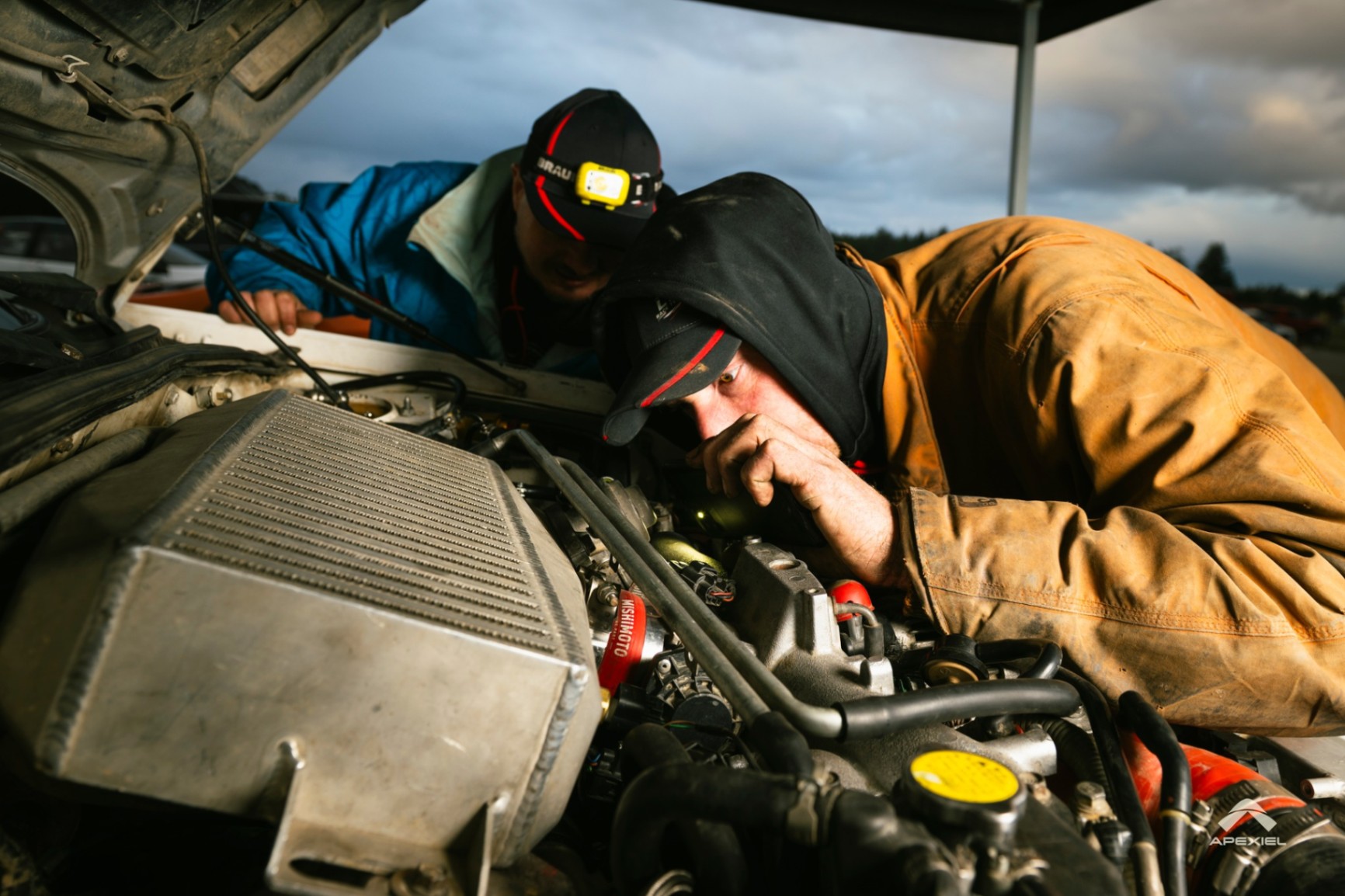
"Fix it, and you can rally it"
By this point, Lee had spent years helping other people go rallying.
Then 2026 Oregon Trail Rally started coming together almost by accident.
Phil had a scheduling conflict with OTR and decided to take the team to Arizona in search of regional points instead. During prep for the trip, Nolan Abell called Lee and asked if he wanted to drive an event.
“Of course I said yes, but the back of my mind told me it may be some cruel joke and I didn't think about it much.”
Prescott Rally was a fun trip, even if, as Lee put it, “we got our asses kicked.”
After the awards ceremony, one of the other teams was throwing a pretty good pit party and everybody was welcome.
“After a while Andrea Lauria wobbles through the door to sit and chat.”
Then she looked at Lee and asked:
“I heard you might be looking for a co-driver for OTR.”
Lee hadn't really talked to Nolan since the original phone call and started wondering if something was happening behind the scenes.
A few days later, registration opened while the team was driving home from what Lee jokingly calls the “Arizona ass kicker.”
“I sent a message asking him if he signed me up.”
The next thing he knew, phones were blowing up and Eric Holcomb was giggling in the back seat.
“Sure as shit there I was on the entry list.”
There was only one question left.
What was he driving?
“Nolan said Steven Redd has a car with a dead engine. You fix it and supply your own crew, you can run it.”
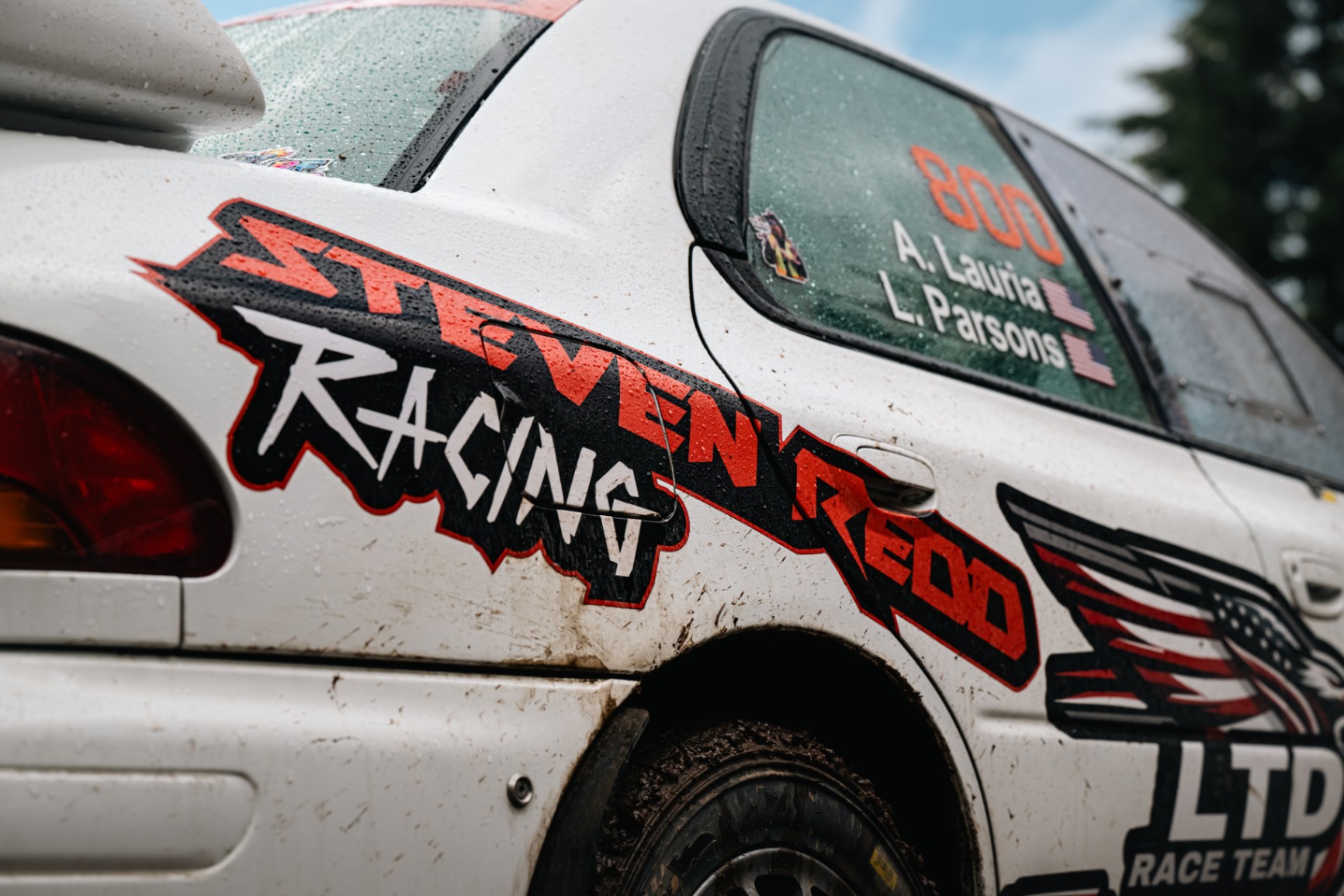
Lee turned around in the truck.
“Would you guys cre...”
He didn't even get the question out.
“Tim, Eric, and Sherm Morris all cut me off and said, ‘Of course we're gonna crew for ya.’”
Just like that, after years of building cars, building cages, crewing for other people, and helping others get to the start line, Lee suddenly found himself with a car, a co-driver, and an entry for Oregon Trail Rally.
It's finally his turn.
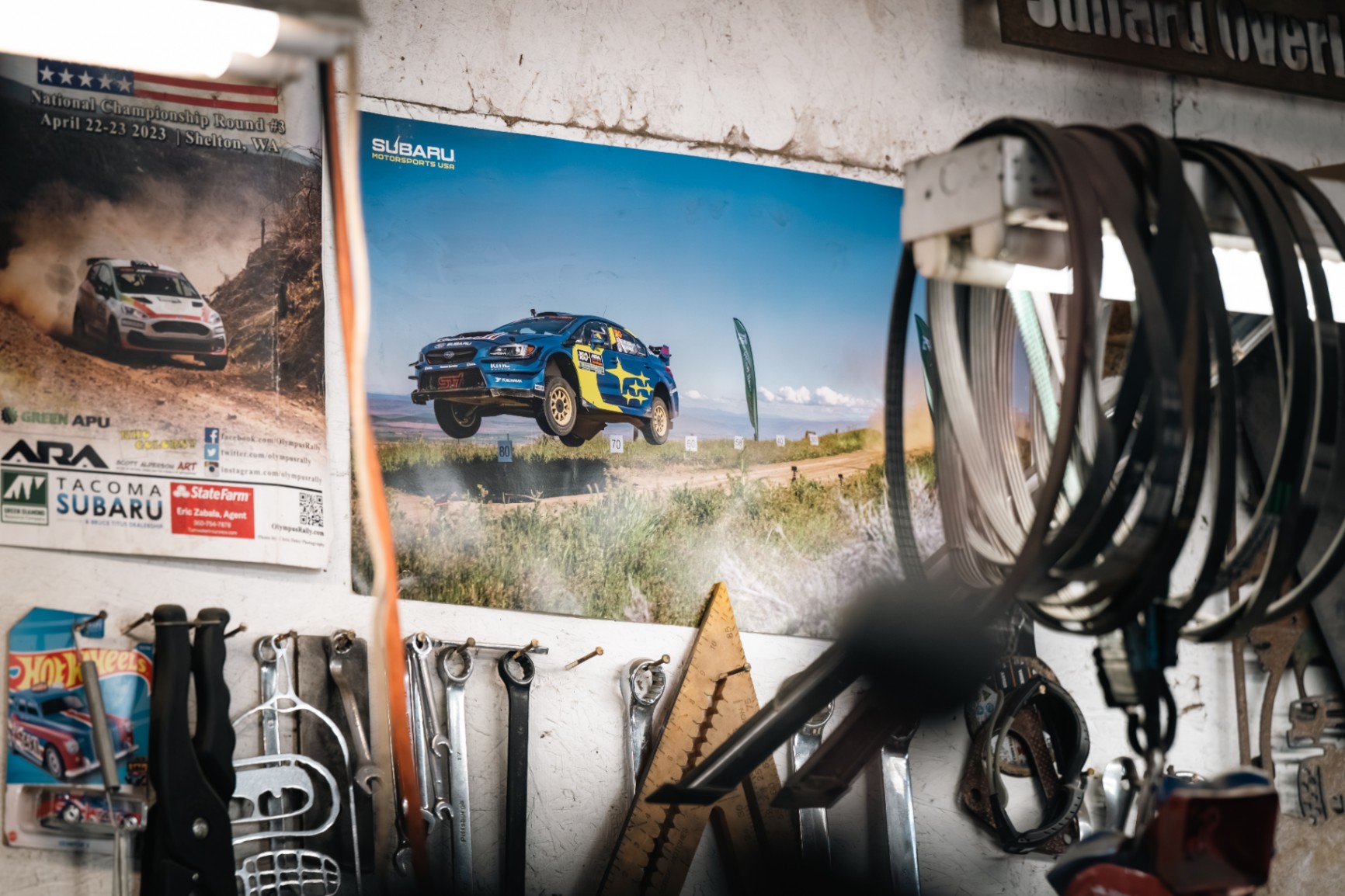
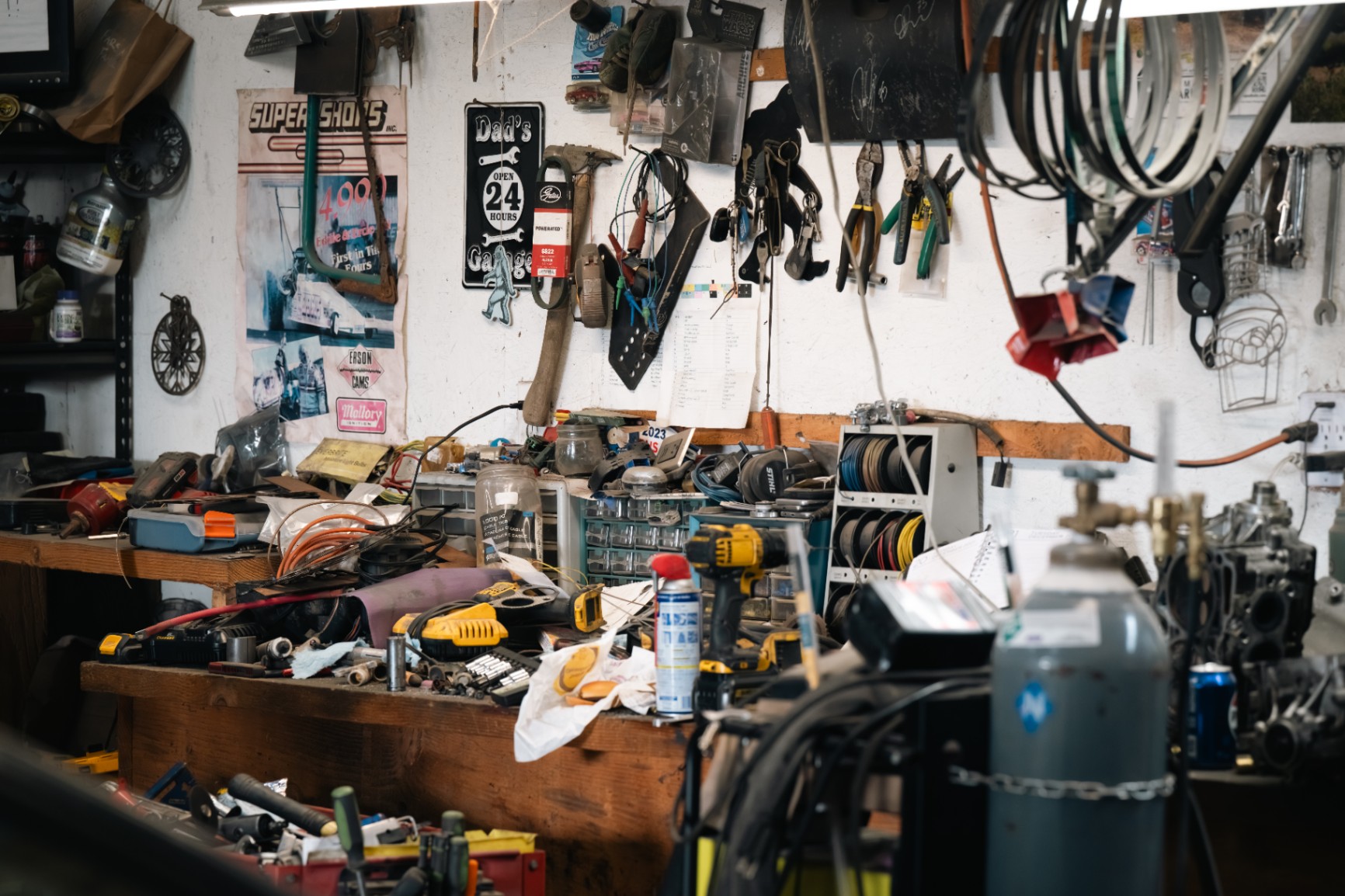
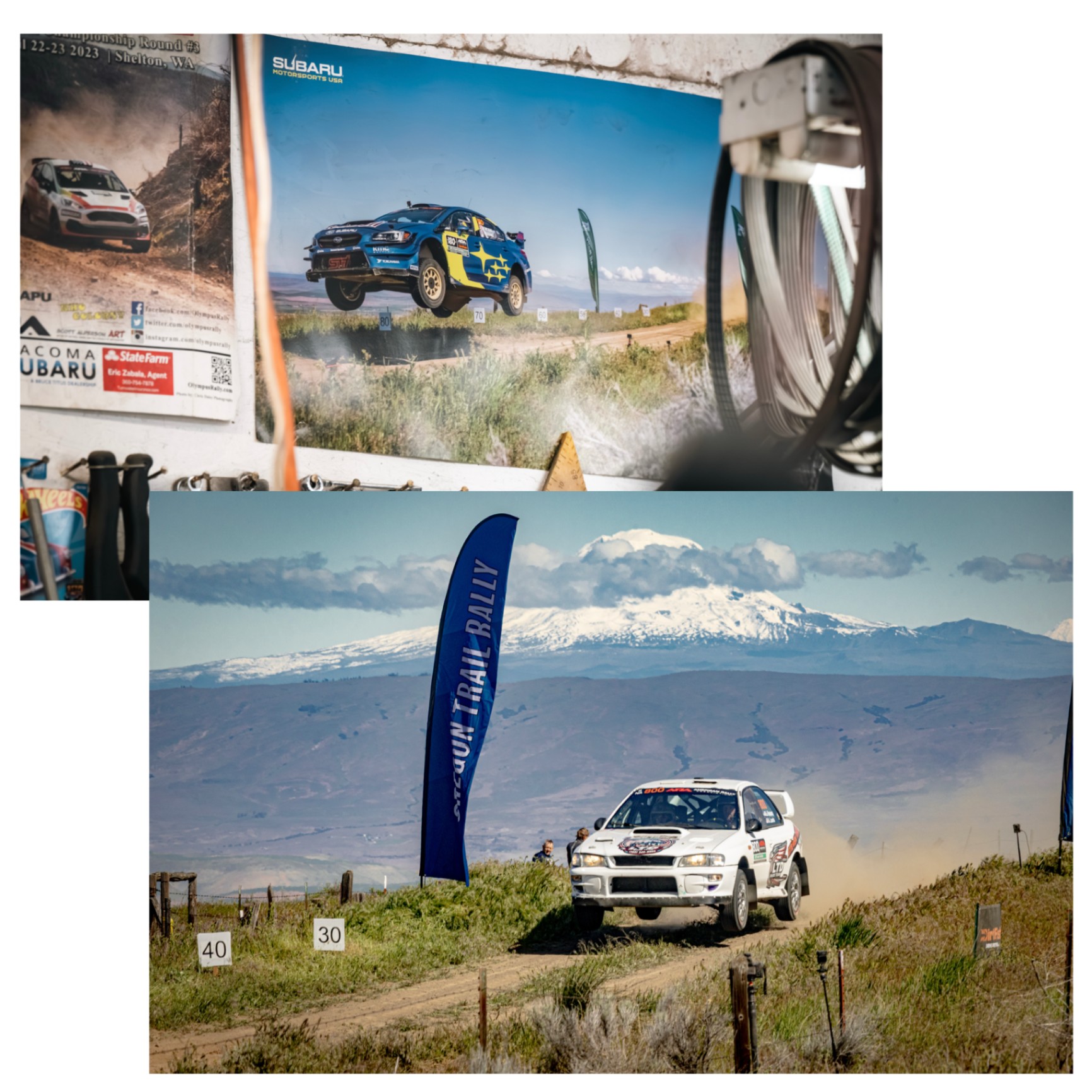
In Lee's shop, I noticed an Oregon Trail Rally poster hanging right above his workbench. For years, OTR had been something on the wall. Now it was on the calendar.
All he had to do was build an engine.
Oregon Trail Rally
Getting onto the entry list was one thing.
Getting the car ready was another.
“Over the years I've collected quite a few spares so I dug through the pile of cores and built a couple engines with the best of the pile.”
Not one engine.
Two.
“Every race I've crewed for Phil I've been asked about spare 251s so I wasn't going without a backup.”
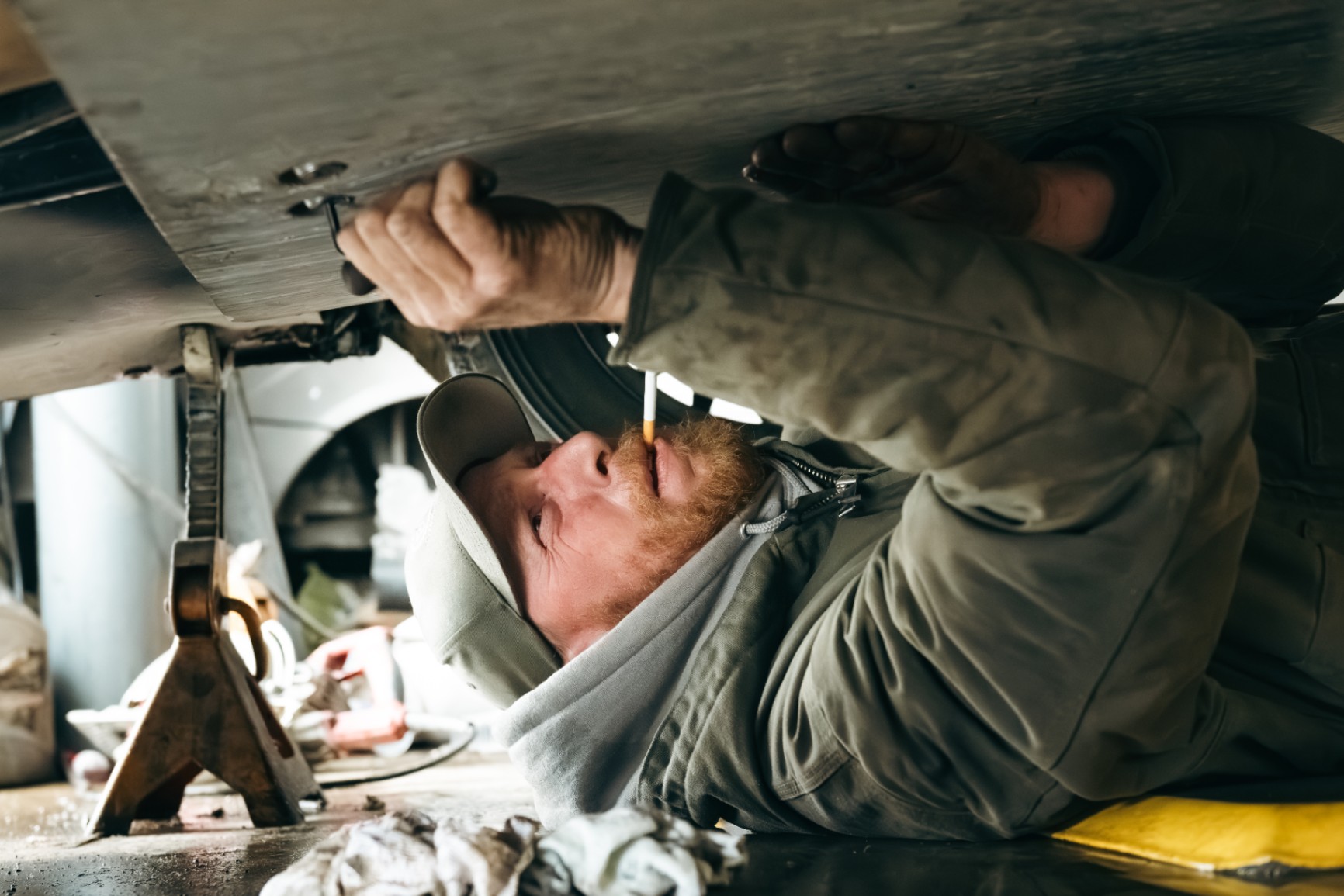
Once the car was running, there wasn't much time left.
“So I get it running, go for a couple test drives and have one weekend to attempt some testing and seat time with the car.”
The bigger challenge wasn't the engine. It was everything else.
Lee had spent years driving by feel, but he'd never made pace notes or had them read to him before.
“Since I've never made notes or had them read to me I figured I'd go for the full simulation mode.”
A few days later, he found himself sitting at the start line of Oregon Trail Rally.
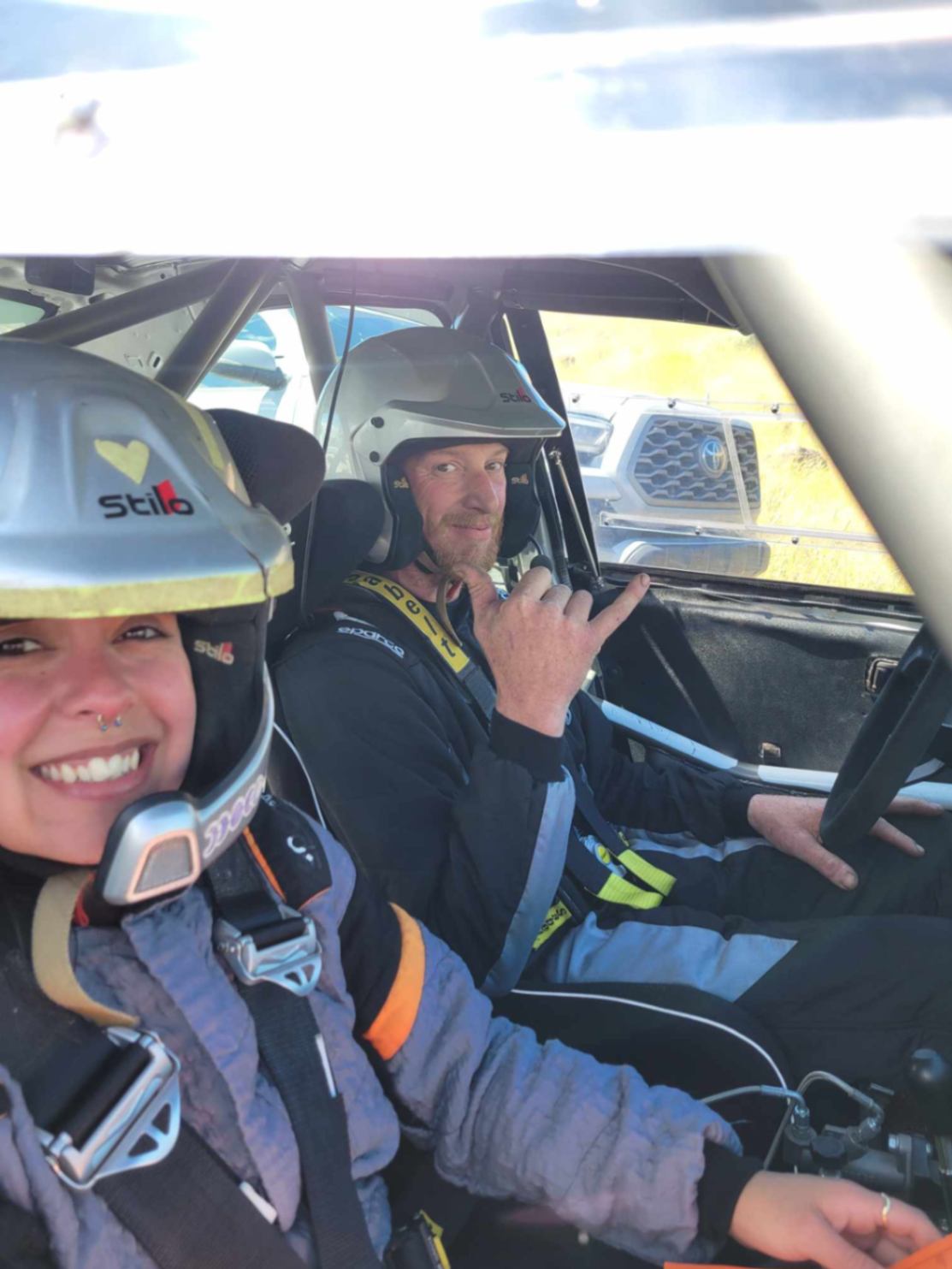
“We're at Parc and it's finally really sinking in that this is happening and I'm about to fulfill a dream.”
Before the first stage, he gave the team one instruction.
“I told the team I don't wana hear a peep about times or positions until ferme.”
The goal wasn't results.
The goal was to drive and finish.
Then the nerves hit.
“We get to the time control and my heart is sitting on redline at 6000 bpm.”
The countdown started.
The clutch dropped.
“All that washed away, and it was just me and the car.”
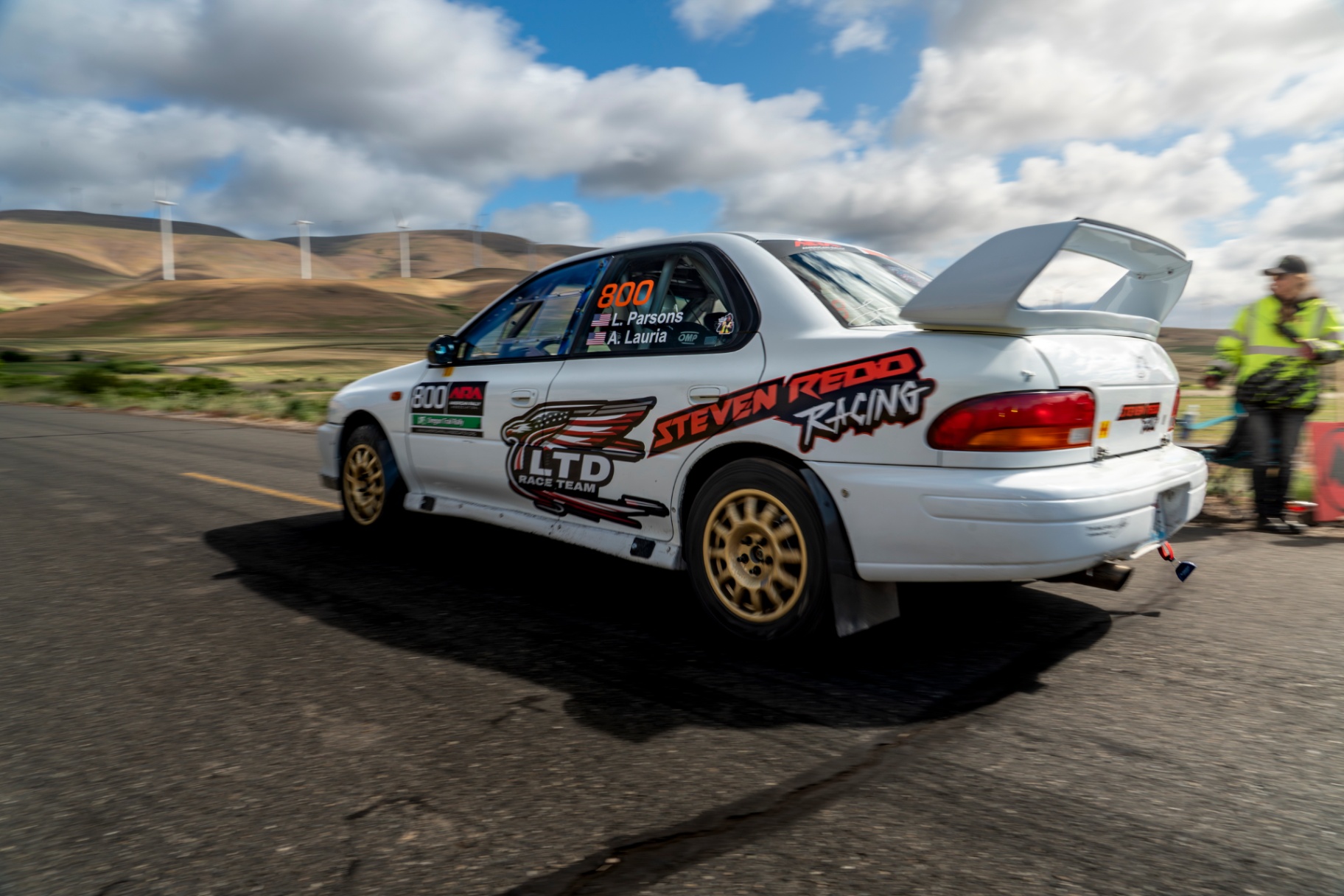
The first few corners were a little messy as Lee learned the car and settled into the rhythm of stage rally. Then he spotted something ahead.
The car in front.
“Well I started tasting blood in the water.”
He didn't catch the car before the finish, but he got close enough to watch it cross the line.
Stage two brought a different challenge. During testing, Lee had sheared rear axles while launching the car on hardpack, so he was being extra cautious on pavement.
He stalled the car at the start.
“Embarrassing? Maybe a bit, but I still had rear axles.”
A couple miles later he was reeling in another competitor. Andrea hit the push-to-pass. The gap kept shrinking. Eventually, after plenty of horn and several pushes of the button, Lee finally drove around the outside in a long right-hand corner.
Then came the gravel.
“Finally, the moment I've been waiting for.”
The notes were starting to make sense. The car felt comfortable. Everything was beginning to click.
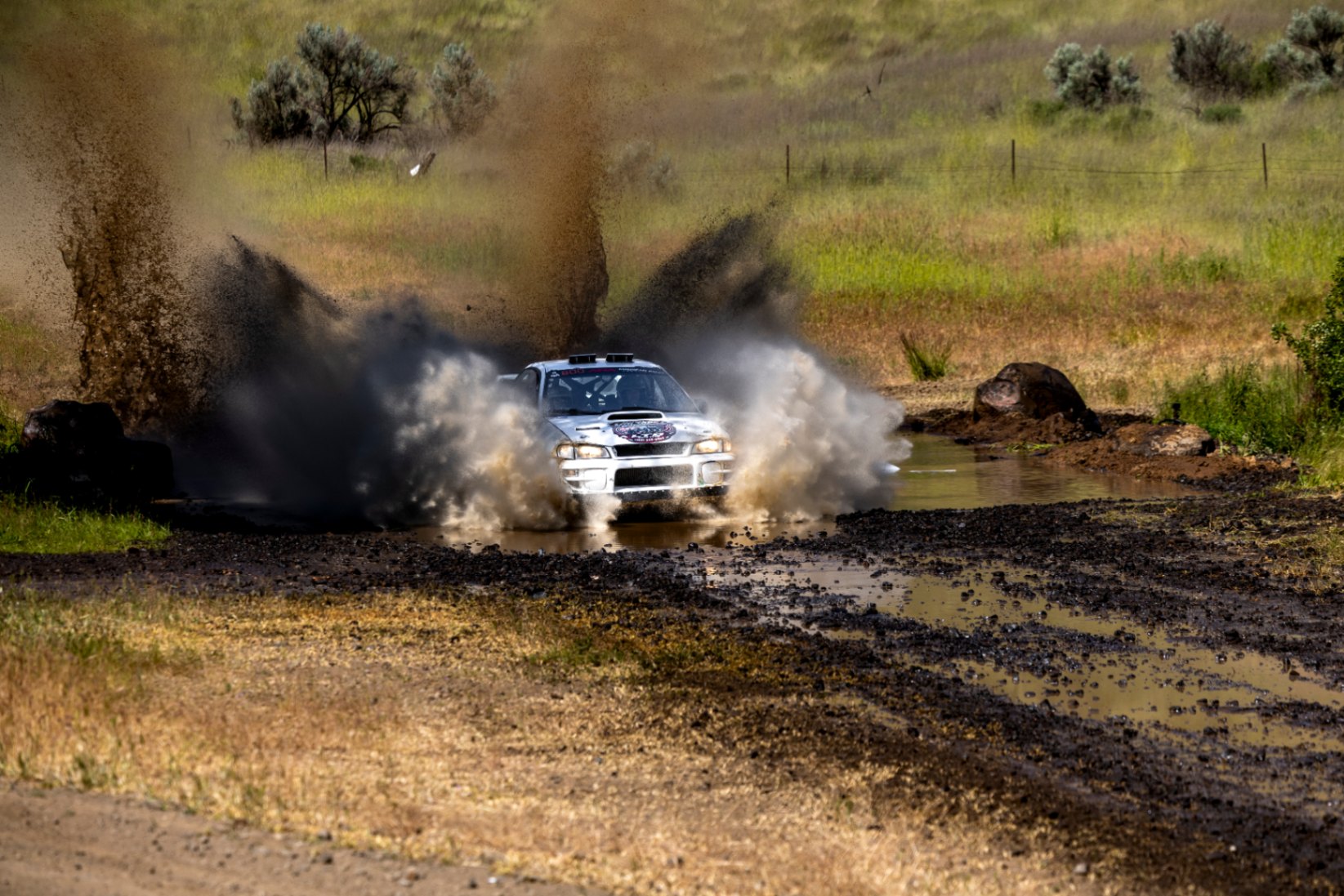
By the end of the stage he could see dust ahead.
And that meant somebody was catchable.
The next stage put him behind one of his rally friends, Jacob Sturgeon.
Before the start, Jacob walked to the back of his car to turn on a camera.
“I make the ‘fish on!’ motion through the window.”
At first it was a joke.
Then it wasn't.
“I ended up reeling him in and sticking the nose of the car in the worst dust cloud at mach Jesus.”
At one point they burst out of the dust cloud with nothing but a telephone pole coming at them sideways.
“You can see where I popped out of the dust, I went, ‘Uh-oh!’”
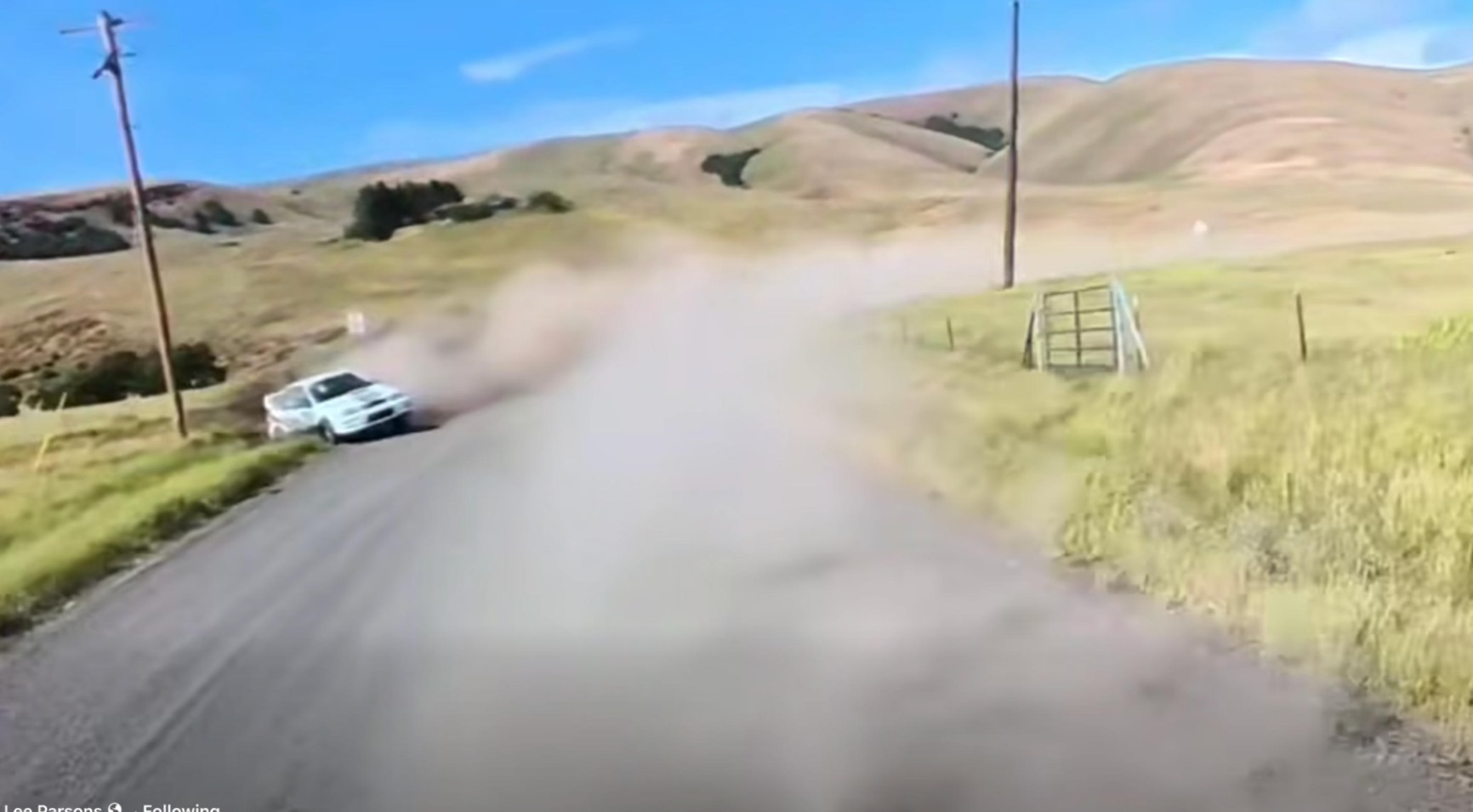
Lee immediately turned in to get the weight transferred and the car rotating.
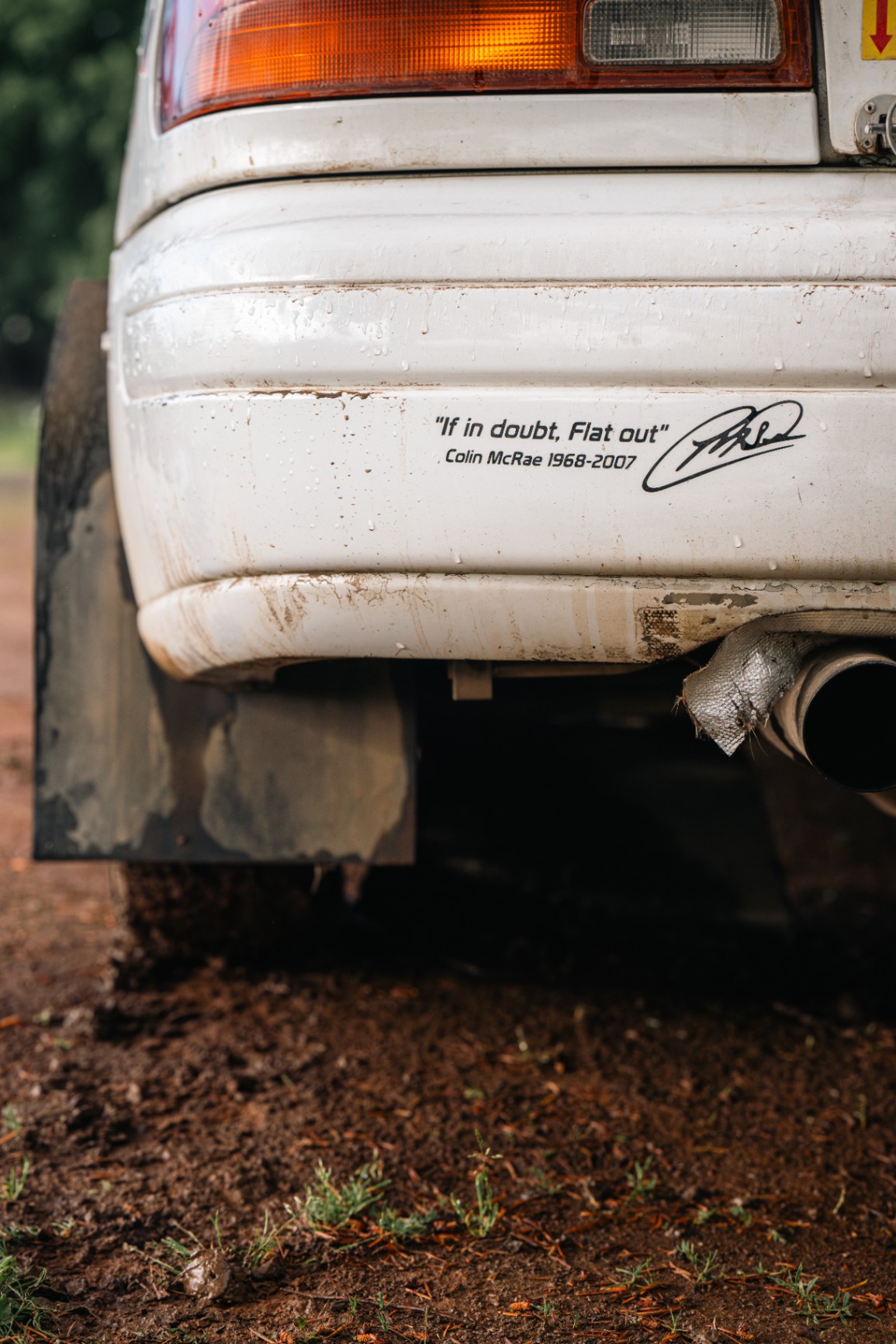
“By the time we were just coming off the road, I'm jamming it into third gear, thinking to myself, ‘All right, Mr. McRae, you better have been right about this!'"
The car dug in and pulled itself back onto the road.
After a brief excursion, Lee gathered it back up, caught Jacob again, and eventually worked his way past.
“Thanks Jacob, that was a hell of a rush.”
By the third day, the pressure was gone.
His start position had moved forward enough that he wasn't dealing with dust anymore. He stopped thinking about catching cars and simply enjoyed the drive.
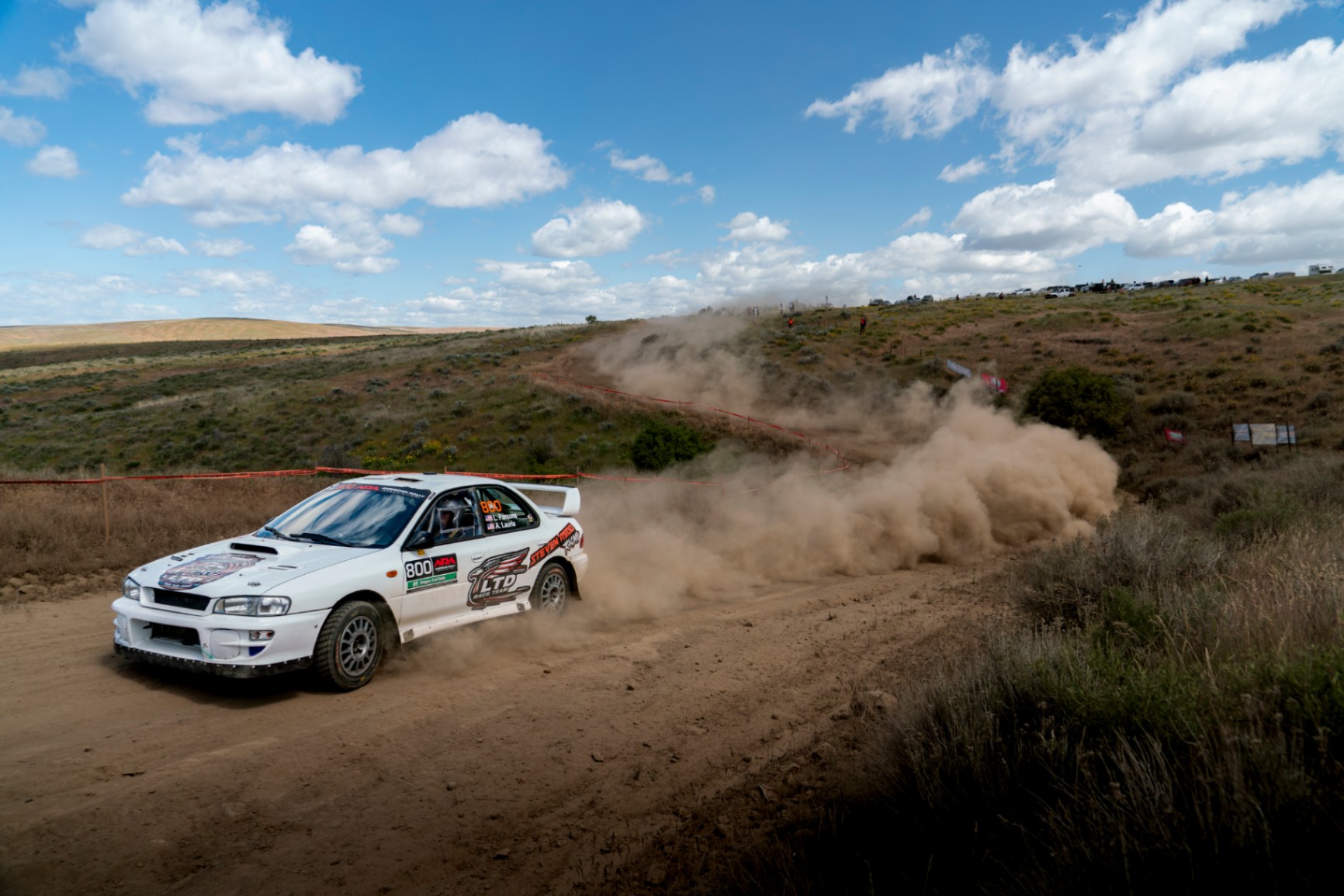
“I didn't care where I placed, I didn't care about times, all that mattered was enjoying the accomplishment of fulfilling life long dreams.”
Then he rolled into Parc Fermé.
There's his family, friends, and crew.
“All waiting there cheering for me. THAT was my trophy.”
As someone who didn't want to hear a peep about placement, only afterward did he learn he had finished 4th in class and 22nd overall!
Looking ahead
A few weeks after Oregon Trail Rally, I visited Lee at his shop.
The rally car was sitting inside, partially apart. OTR was over, but Lee was still working on it.
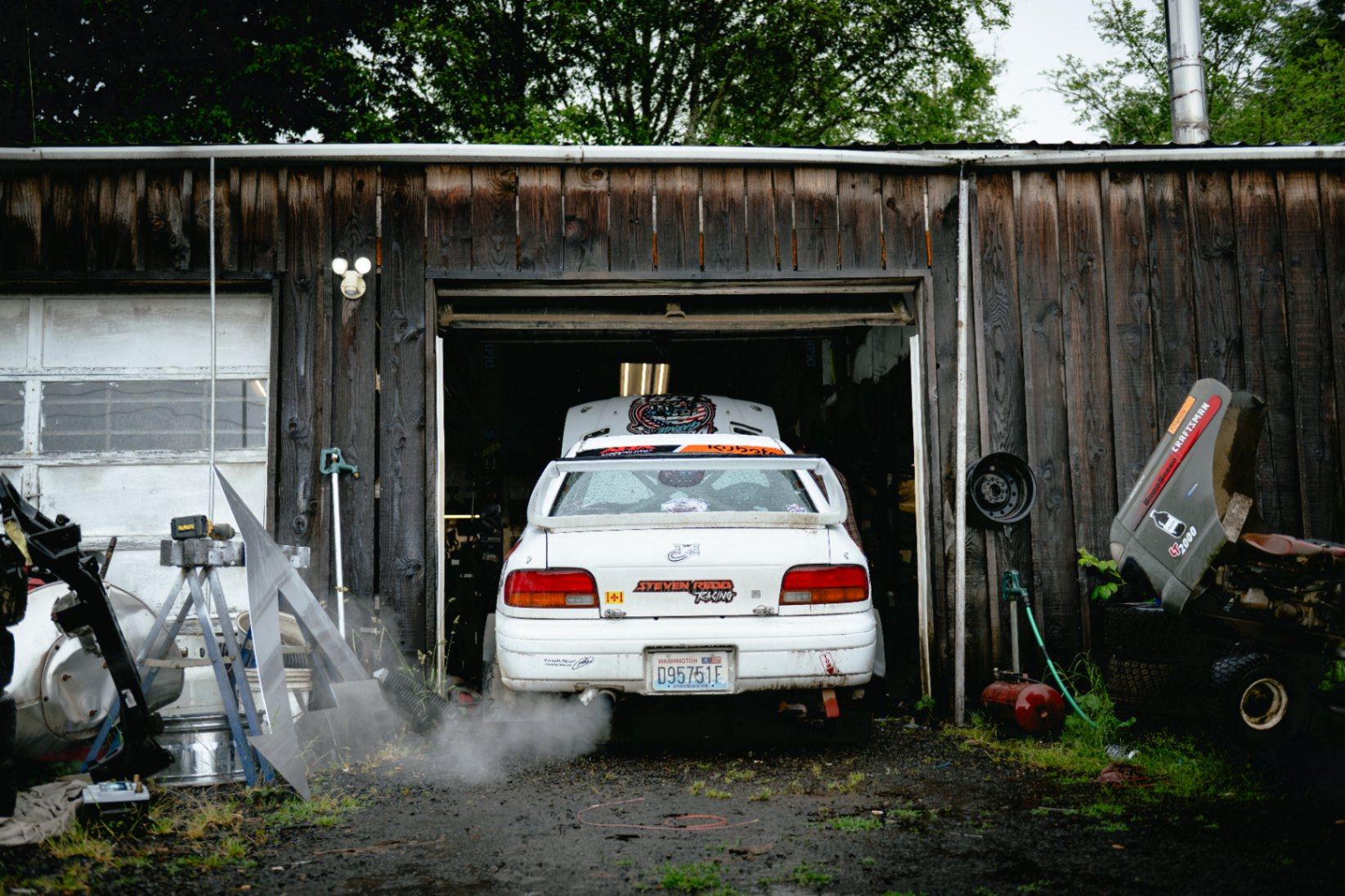
The engine that got him through the rally had gone through quite a bit of oil over the weekend. It still ran, but Lee didn't feel right sending the car back to Steven Redd that way. So he was pulling it out and putting another engine in before returning the car.
That seemed fitting somehow.
Throughout Lee's story, people kept giving him chances. Phil trusted him to build a stage rally car. Nolan found a way to get him onto the OTR entry list. Andrea climbed into the co-driver seat. Steven handed over a rally car and said, essentially, "If you can make it run, go drive it."
Now that the rally was over, Lee was making sure the car went back in good shape.
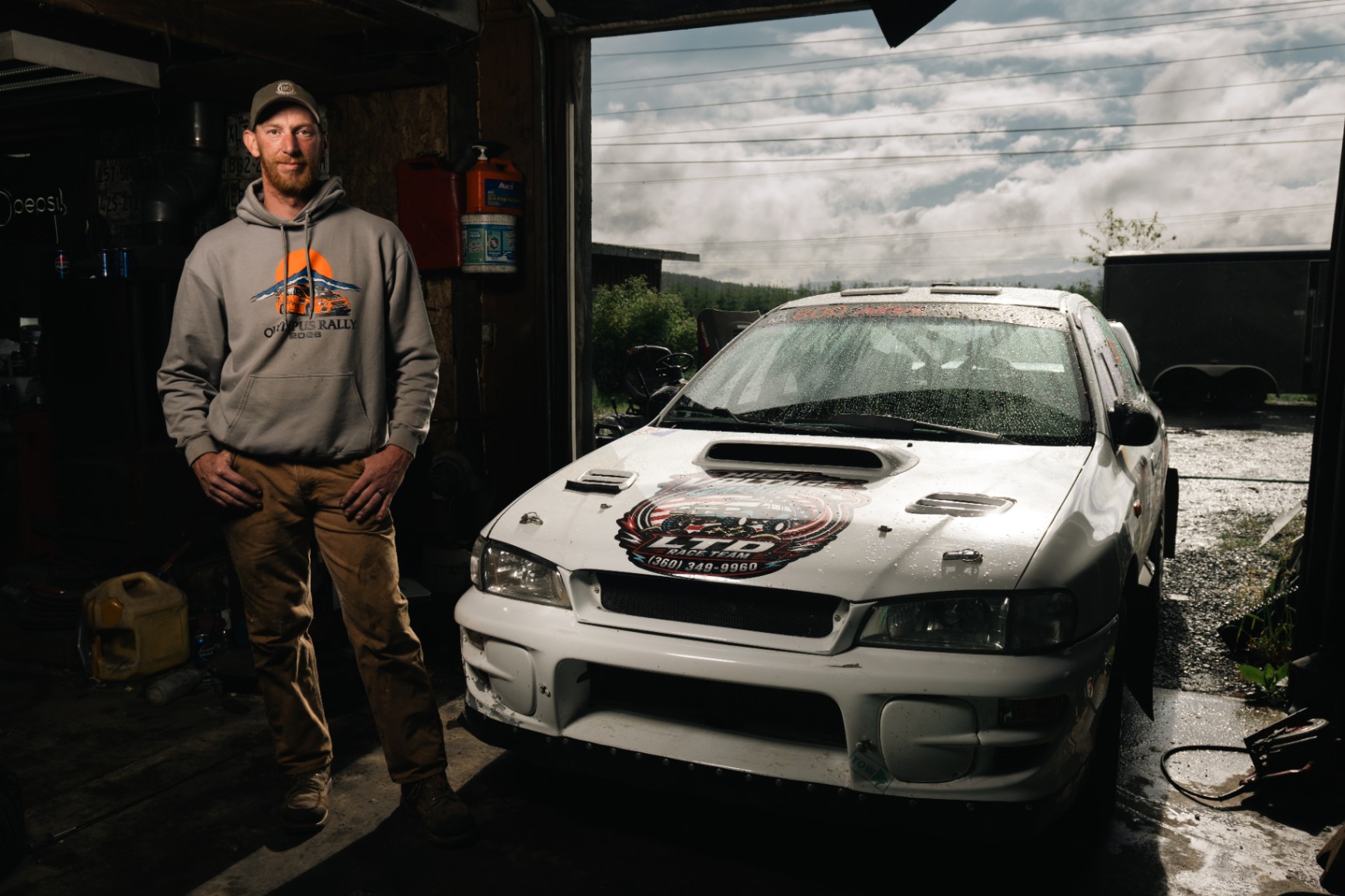
As we talked, I asked him about something that had bothered me during my own first Oregon Trail Rally.
Fear.
The drop-offs. The speed. The moments when the car starts moving around more than your brain would prefer.
Lee admitted the fear is there.
“Yeah, yeah, there's a little sense of fear there.”
But his approach wasn't to eliminate it. It was to leave himself room.
“I really drove the car this weekend on... I was fairly conservative. Like, I was comfortable in my speed, but not going so fast to where I'm on that ragged edge all the time.”
That way, if something unexpected happened, there was still a little bit left in reserve.
“If I do have a moment where, ‘Oh, shit, this corner is a three, not a four,’ I've still got a little bit of skill in the tank and a little bit of traction left.”
I also asked what he enjoyed most about driving on loose surfaces in the first place. After all, a lot of people experience the 500-feet drop at Dalles mountain down and decide they'd rather not do it again.
Lee laughed.
“Those moments.”
“The ‘oh my god, I don't know if we're going to survive this... holy shit, I can't believe I pulled that off!’”
For him, that's where the fun is.
“That's the rush in it for me, just finding that ragged line of control and total chaos and just tip my toe over it every once in a while.”
“Where's that limit? Oh, there it is! Found it!”
That mindset showed up throughout the rally. Lee told his crew and co-driver not to tell him about times or positions. He wasn't there to chase placement. And when all was said and done, that's exactly what he did.
I also asked what comes next.
The answer came quickly.
“There will be a next time, absolutely.”
The long-term plan is already forming. Keep building cages. Keep helping rally teams. Slowly work toward building a stage rally car of his own from the ground up.
But that's a story for another day.
For now, he's back doing the things he's always done.
Building. Fabricating. Helping friends.
Getting cars ready for rallies.
The Oregon Trail Rally poster still hangs above his workbench.
The difference is that now it's a memory instead of a dream.
Looking for a Rally Car Builder?
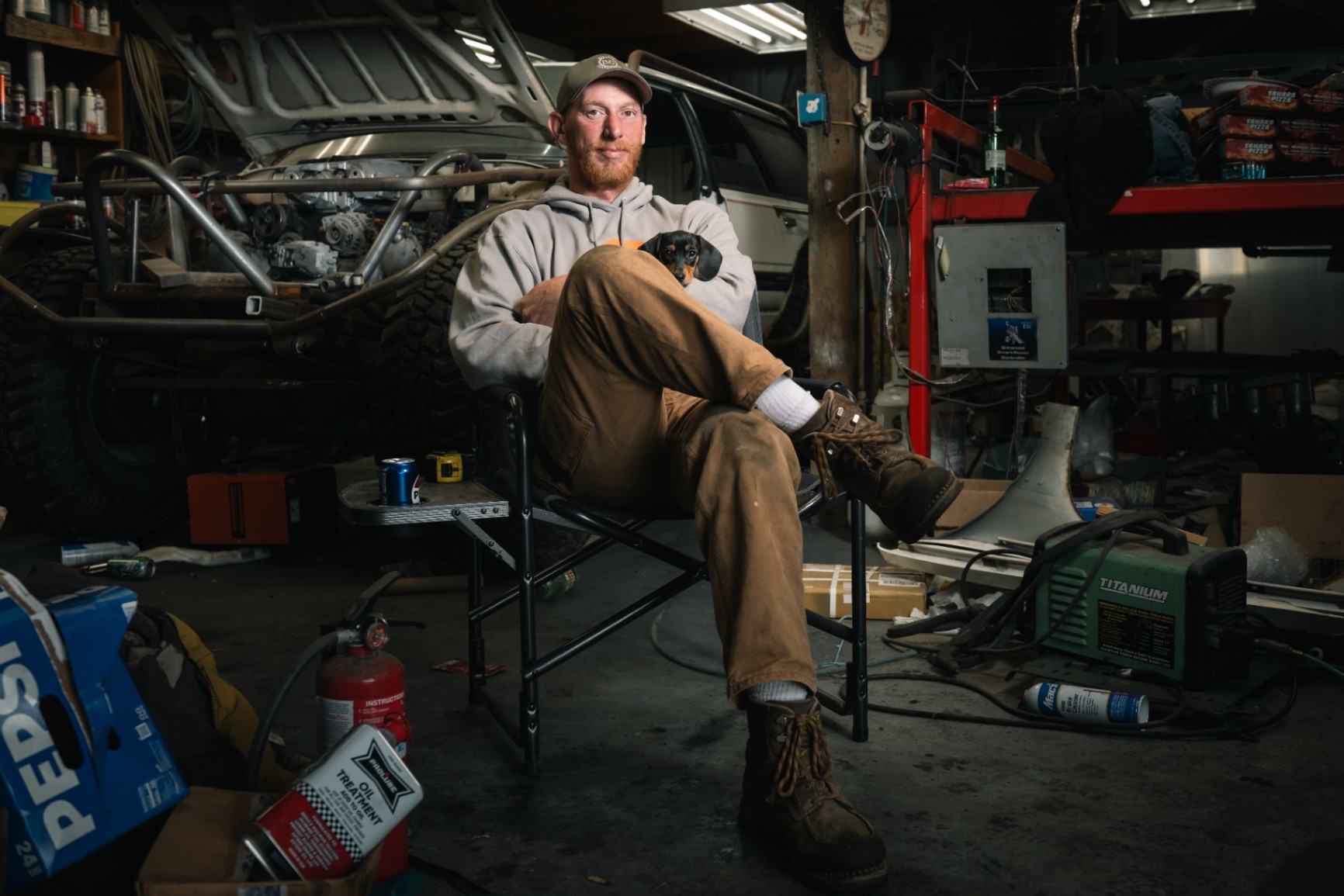
Today, Lee operates a shop in Winlock, Washington, specializing in roll cages, rally car preparation, and motorsports fabrication.
Whether it's building a cage from scratch, helping bring a stage rally car project to life, or solving the hundred small problems that come with getting a race car to the start line, it's work that combines the skills he's spent a lifetime developing.
If you're involved in rally, rallycross, or grassroots motorsports and are looking for fabrication work, feel free to reach out to Lee through his Facebook or the rally community.
© 2026 Peng Du.
This article was independently produced by Peng Du with the help of Lee and other the OTR participants to promote grassroots motorsports and preserve the stories of the people who make the sport possible; it was not sponsored or funded by any team, company, organization, or individual.
Sharing is encouraged. If this story resonates with you, please help us spread it by sharing, reposting, or forwarding it, while crediting the Author.
About the Author: Peng Du is a photographer, rally competitor, and co-founder of Apexiel, with a passion for preserving the stories behind the people who build, support, and participate in grassroots motorsports. Got story? Please reach out to him via IG.
"Mr. McRae, you better have been right about this." - Lee Parsons
 Share
Share